
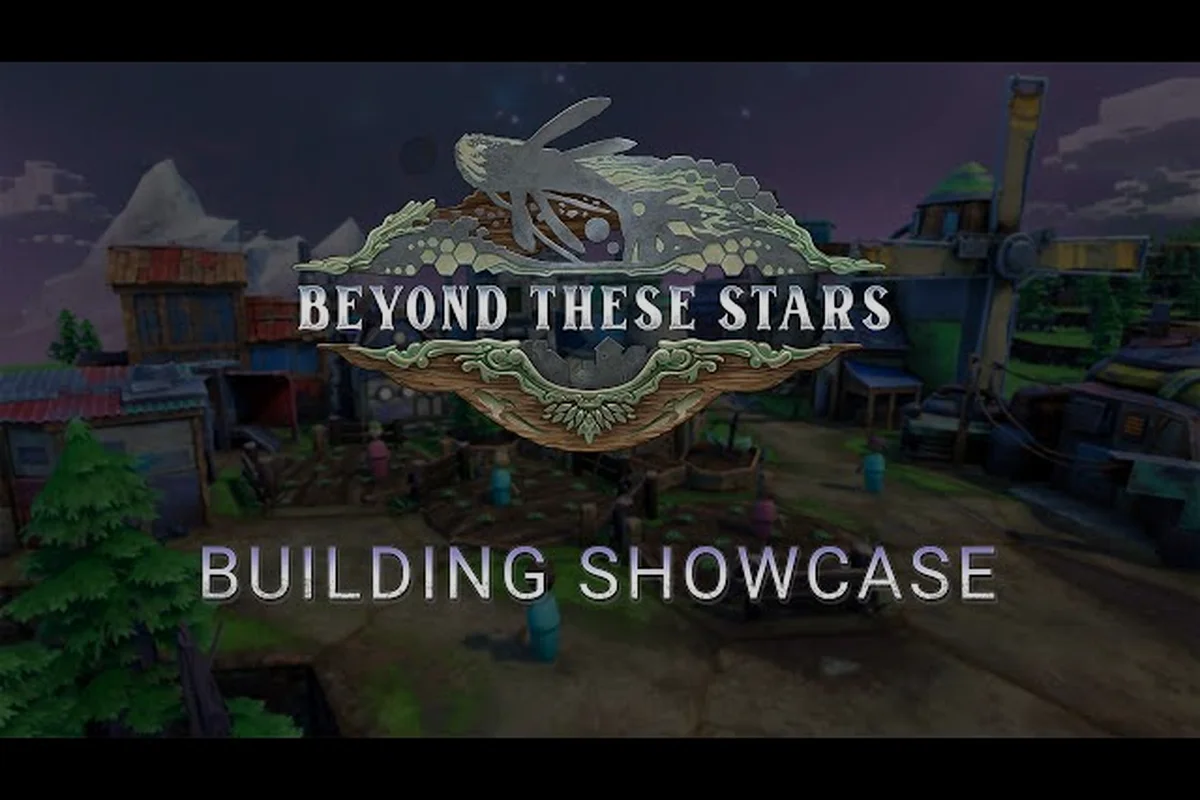
The 1.0 launch of Beyond These Stars dropped on October 16, 2026, and the very first question on every new player's mind is which buildings actually exist, what each one does, and how the upgrade paths are supposed to feel in practice. Because the game shipped straight to 1.0 with no Early Access, there is no sprawling community wiki yet, so a clear beyond these stars building list is genuinely useful on day one. This guide walks through every named structure the developer has confirmed, groups them by what they handle in your city, and flags the systems the studio has not yet published.
The 1.0 Building List at a Glance
The developer at Balancing Monkey Games has officially named sixteen player-facing structures for launch, plus the Settlement Ship which is delivered to the player rather than built. Every other building in the game fits somewhere in this set, and the Beyond These Stars on Steam tags the broader experience as City Builder, Colony Sim, Base Building, Resource Management, Automation and Sandbox, which already hints at how these structures are designed to interact.
| Category | Named Buildings | Primary Job |
|---|---|---|
| Starter / Hub | Home Spaceship | Early resource production and Peep spawning |
| Food & Drink | Kitchen, Pasture, Composting | Turn raw ingredients into meals; recycle waste |
| Clothing | Weaver, Tailor | Convert wool and cotton seeds into Cold and Warm Weather Clothing |
| Industry | Burner, Trawler, Cleaner | Convert wood, harvest Shell, mix Water and Chemicals for pollution control |
| Nature | Tree Nursery, Apothecary | Plant trees; heal sick Peeps |
| Space Layer | Space Port, Landing Pad, Spaceship Builder | Ship management and orbital expansion |
| Social | Fairground | Host Celebrations |
| Settlement | Settlement Ship (delivered, not built) | Found new outposts on planets |
How Building Tiers Work in 1.0
The game does not expose a numeric "tier" for any structure in the official material, but it does use a few behind-the-scenes gates that act like soft tiers. New players get the Home Spaceship, Kitchen, Pasture and a handful of basic shelters from the start. Research unlocks the more advanced buildings such as the Apothecary and any structure that produces Advanced Goods. The studio has not published exact unlock order, so treat the list below as the developer's confirmed roster rather than a fixed ladder.
Where the Settlement Ship Fits
One source of confusion on day one is that the Settlement Ship appears in the building catalogue but you do not build it. According to the official dev diaries, the Settlement Ship arrives as a story deliverable so you can land on a new planet and found an outpost. The Spaceship Builder, by contrast, is a real player-built structure that produces the smaller craft you use to shuttle Peeps and goods between Space Ports.
Resource & Industry Buildings
The production layer in Beyond These Stars is intentionally compact, because the developer has confirmed that stone and ore deposits are deliberately absent from the game. That single design choice reshapes the entire building list: there is no smelter, no quarry, and no metal refinery. The named industry buildings focus on organic resources, clean-up and shell harvesting instead.
| Building | Input | Output | Notes |
|---|---|---|---|
| Burner | Wood (configurable) | Heat / byproducts | Can be set to consume the Wood resource; one of the few configurable power sources |
| Trawler | Water access | Shell | Harvests the Shell resource |
| Cleaner | Water + Chemicals | Pollution reduction | Peeps mix Water and Chemicals at the building; the direct way to fight Pollution |
| Composting | Food Waste, Wood Waste | Top soil | Feeds terraforming and Tree Nursery loops |
| Tree Nursery | Top soil | Trees | Indirect Pollution control and a way to keep the biome healthy |
Burner and the "Power" Question
Players coming from classic city builders will look for a Power Plant on the building list and not find one. The Burner is the closest analogue, and it can be set to consume the Wood resource. The Hotfix #1 patch on October 17 even adjusted the on-screen range indicator for the Power Generator to show Power range rather than Pollution range, which confirms there is at least one electricity-style building whose emission radius is part of the layout puzzle. The studio has not published per-tile power numbers, so for now you read the Burner as a wood-fed production building with environmental side effects rather than a kilowatt-rated power plant.
Why No Water Pump?
The keyword "beyond these stars water pump" is common in search, but the developer has not named a water-pump building in the official material. Water is a real resource in the verified list, and the Trawler needs water access to harvest Shell, while the Cleaner mixes Water with Chemicals. So the question is reasonable, but the answer on day one is that there is no standalone pump structure. Water handling is tied to the buildings that actually need it, and the Trawler is the closest named structure that touches water. A broader discussion of how to plan a city around these constraints sits in the city building guide for the site, which covers the same launch material with more layout examples.
Housing, Shelters and Peep Wellbeing
Housing is the heart of any beyond these stars housing guide, but the developer has not published a building literally called "House." Instead, the named structures that cover your Peeps' needs are spread across food, clothing, health and shelter, plus a starter that doubles as a population engine.
| Need | Building That Addresses It | Extra Notes |
|---|---|---|
| Shelter and starter spawns | Home Spaceship | Slowly produces what your first Peeps need; acts as your command deck |
| Food | Kitchen | Turns ingredients into meals including soup |
| Health | Apothecary | Heals sick Peeps; texture work for it was still being iterated on in Dev Blog #25 |
| Mood / Celebrations | Fairground | Where Peeps hold Celebrations once enough nearby Peeps pass a high happiness threshold |
| Clothing for survival | Tailor + Weaver | The Weaver converts raw materials into fabrics; the Tailor makes Cold Weather and Warm Weather Clothing |
| Aging populations | (No dedicated building) | Children and Elders are model-distinguished rather than housed in different buildings |
How to Build Houses Without a House
This is where the search "beyond these stars how to build houses" gets a little slippery. The game does not have a "House" structure in the confirmed list, so when veteran city builders ask how to build houses, the real answer is that you build the surrounding systems: a Kitchen for meals, a Weaver and Tailor for weather-appropriate Clothing, a Pasture and Tree Nursery for inputs, and an Apothecary for the sickness layer. The Home Spaceship covers the first wave of Peeps before your research tree opens up housing-shaped upgrades. Dev Blog #25 notes that sickness chance rises as Peep energy falls at the start of a shift, which is why having a meal and a clothing pipeline early matters as much as raw shelter.
Building Upgrades and the Research Gate
The phrase "beyond these stars how to upgrade buildings" shows up constantly, but the developer has not published a per-building upgrade ladder. The closest thing to an upgrade system is the Research / Technology / Perks tree, which gates Advanced Goods and presumably more advanced structures. Within each building, the available configuration is small in launch: the Burner can be set to consume Wood, and the Tailor and Weaver respond to which raw materials you pipe in. Players should treat any third-party upgrade tier list as speculation; the studio has not published the formulas.
Space Layer Structures
The space layer is where Beyond These Stars diverges from classic city builders, because the Space Whale Kewa is your ground but the galaxy is your map. Three named structures handle this layer, and they are the only player-built space buildings in the game.
| Structure | Function | Key Rule |
|---|---|---|
| Space Port | Shuttle ships between locations | Can hold up to four Landing Pads, each taking one ship at a time |
| Landing Pad | Required for any ship to land on Kewa | Space Ships cannot land on Kewa without a Landing Pad |
| Spaceship Builder | Produces player-controlled ships | Player-built spacecraft are limited to the named ship types |
| Settlement Ship | Found new outposts | Not built by the player; delivered as a story event |
Why the Landing Pad Rule Matters
The Landing Pad rule trips up new players because there is no warning when a ship enters orbit. The Scout Ship, the Settlement Ship and any future ship you build in the Spaceship Builder all need a Landing Pad tile to touch down, and a Space Port can only host four Landing Pads at once. The official developer article index breaks this down across Dev Blog #28 and the Outpost diary, both of which stress that the moment a ship cannot find a pad, the rest of your space plan stalls.
Outposts and the Galaxy Map
Outposts are on nearby planets and supplement what Kewa cannot supply, which is the main reason you need a working Space Port at all. The Galaxy Map is partially visible at the start and unlocks over time, and its nodes can hold barren planets, space junk, strange objects, trade stations and aliens. A trade station is a map-node feature you travel to, not a building you place, which means it does not appear in the player-built beyond these stars all buildings list. For more on map planning, the city layout guide covers how the space layer connects to the surface layer.
How to Use the Building List in Practice
Now that the full list is on the table, the practical question is how to deploy it. A good rule of thumb is to start with the verified buildings the developer has flagged in the launch material and avoid inventing structures that have not been confirmed. The studio's own Beginner Guide, the launch dev diaries and the Steam store page are the only authoritative references for the 1.0 roster.
| Phase | Recommended First Buildings | Why |
|---|---|---|
| Boot | Home Spaceship, Kitchen, Pasture, basic shelters | Get food, spawn Peeps, generate the first fabrics |
| Stabilize | Weaver, Tailor, Composting, Tree Nursery | Clothing pipeline, waste recycling, biome health |
| Expand | Burner, Cleaner, Trawler, Apothecary | Industrial production, pollution control, Shell harvesting, sickness response |
| Reach Orbit | Space Port, Landing Pad, Spaceship Builder | Unlock the space layer, prepare for Outposts |
| Social Layer | Fairground | Trigger Celebrations for production, movement and sickness bonuses |
Reading the Showcase Footage
The 1.0 showcase on the developer's official YouTube channel features every building listed here in real play, which is the fastest way to confirm what the icons look like in motion. The showcase is also a good way to spot the named in-game cast, including Baz the Wanderer, Jose aboard the Scout Ship, Ublo the alien, Matilda, Kieran, Jerry, N'Orva and Lottie, because the developer tied several building flavours to those characters. Player-made showcase videos such as A Whole New 2026 City Building Game by GamerZakh and Can You Build a City on a Space Whale by UnstableVoltage walk through the same 1.0 building list from a player perspective and are useful sanity checks against the official footage.
Limitations of the Published List
The honest caveat is that the developer has not published building costs, exact resource rates, research-tree node names or per-tile production formulas. Anything you see elsewhere that claims a 1.0 production rate for any of these buildings is speculation. The safe assumption is that the studio will iterate, since Hotfix #1 was already shipped the day after launch, and any future patch notes will likely clarify these numbers without changing the named structure roster. For a more focused look at which structures pull the most weight, the best buildings guide covers the same confirmed list with priority advice.
Frequently Asked Questions
How many buildings are in Beyond These Stars at launch?
The developer has officially named sixteen player-facing structures plus the Settlement Ship, which is delivered rather than built. The verified set is Home Spaceship, Apothecary, Fairground, Kitchen, Pasture, Weaver, Tailor, Tree Nursery, Cleaner, Burner, Trawler, Composting, Space Port, Landing Pad and Spaceship Builder. Because the game shipped only one day before this guide, the developer has not published per-building costs, rates or research prerequisites.
Is there a water pump building in Beyond These Stars?
No. The developer has not named a standalone water-pump structure. Water is a real resource in the verified list, but it is handled by the buildings that need it, including the Trawler for Shell harvesting and the Cleaner for pollution control. The closest analogues are the buildings that interact with water, not a dedicated pump.
How do I upgrade buildings in Beyond These Stars?
The game does not expose a per-building upgrade ladder in the official material. Upgrades are gated by the Research, Technology and Perks tree, which unlocks Advanced Goods and more advanced structures. Within an individual building, the Burner can be set to consume Wood, and the Tailor and Weaver respond to which raw materials you supply. The developer has not published formulas, so treat any tier list as speculation.
Where do houses come from in Beyond These Stars?
There is no building literally called House in the confirmed list. Housing is implicit in the surrounding systems: the Home Spaceship covers the first wave, the Kitchen and Pasture provide meals, the Weaver and Tailor produce weather-appropriate Clothing, and the Apothecary handles sickness. The studio models Children and Elders with different icons and sizes rather than housing them in separate buildings.