
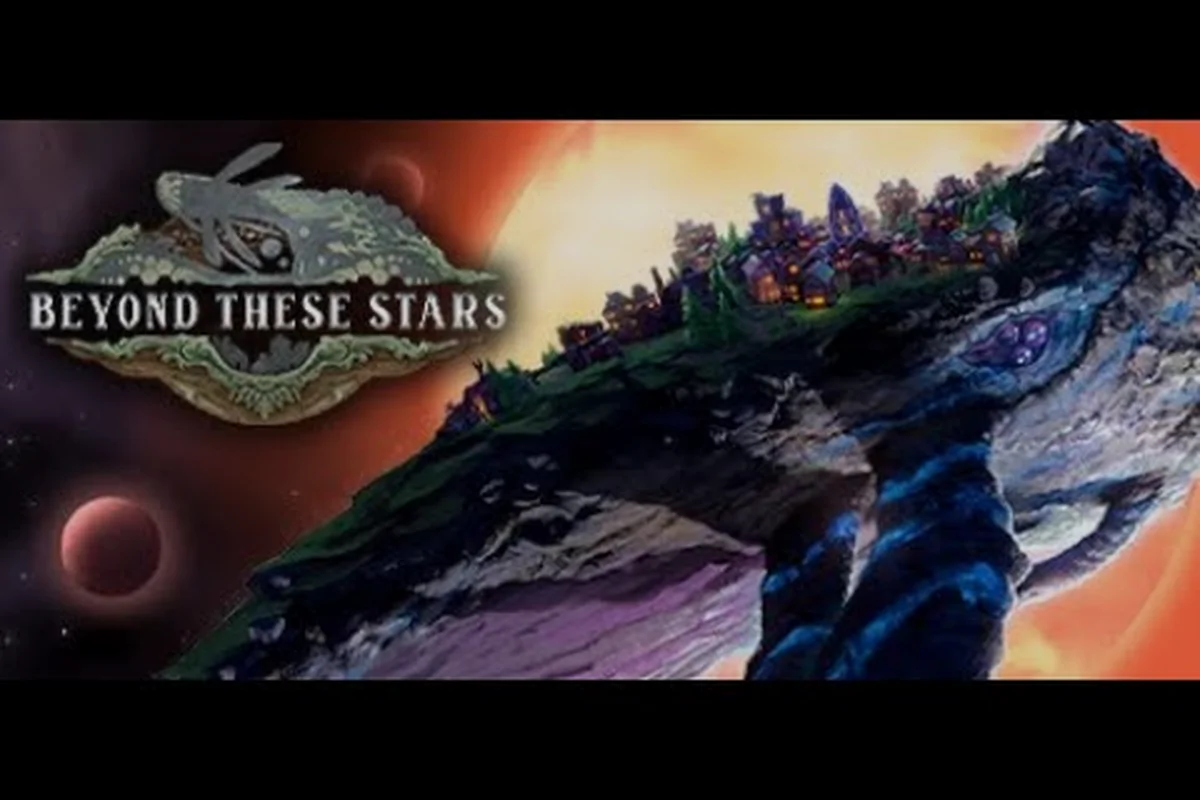
The Beyond These Stars story walkthrough starts on the back of a giant sentient Space Whale named Kewa, where your Peeps have just crash-landed with almost nothing. Story Mode is the developer-recommended first playthrough for a reason: it threads the most important quests together so the galaxy, your settlement, and Kewa themselves all make sense before you ever touch Sandbox. This guide breaks down the campaign's main beats, the real-world hours a run takes, and where the objectives actually point you — without inventing numbers the developer has not published. For the primary source, see the official article index.
What Story Mode Is and How It Differs From Sandbox
Story Mode in Beyond These Stars is the curated campaign that the developer at Balancing Monkey Games recommends players run first. It gates progression through a sequence of named story beats that introduce Kewa, the Peep Ancestors, the Galaxy Map, and the deeper lore connecting the Whale to the place your colony is trying to reach. Sandbox Mode, by contrast, lets you choose your own starting conditions — which resources, water distribution, terrain, and planets you want — and is documented in Dev Blog #27 as a separate, configuration-heavy mode intended for experienced players or replay.
The practical difference for a first-time player is the presence of directed Story Objectives that appear in the quest log. These objectives hand you a specific next action — talk to Kewa, build a Trawler, scan a node — instead of leaving you to read the Galaxy Map and figure it out. If you are the kind of player who likes a soft guide rail, Story Mode gives you one without ever taking away the build freedom of a city builder. If you want pure sandbox from the first click, the sandbox start guide covers the option to skip straight into it.
| Aspect | Story Mode | Sandbox Mode |
|---|---|---|
| Recommended for | First playthrough, lore-focused players | Experienced players, replay seekers |
| Quest structure | Directed Story Objectives push you forward | Open-ended, no required order |
| Kewa / Ancestor lore | Fully threaded through the campaign | Optional, mostly player-driven |
| Galaxy / planets | Introduced in story order | Choose from the start (Dev Blog #27) |
| Best for understanding "why" | Yes — story beats explain core systems | No — you learn by experimentation |
For the purposes of a walkthrough, every section below describes what the Story Mode campaign actually does, not what a sandbox run can do. If a quest references Kewa's happiness or a specific named character, that is a Story Mode objective, not a sandbox rule.
The Main Story Beats in Order
The story in Beyond These Stars is structured around four large narrative arcs, each tied to a different phase of the campaign. The exact quest titles below come from the developer's campaign design; the developer has not published a minute-by-minute timestamp for any of them, so this walkthrough describes each beat in Shift order (the in-game time unit), not in real-world minutes.
Act 1 — Crash, Settlement, and the First Conversation with Kewa
You begin in the wreckage of the Home Spaceship with a handful of Peeps and almost no resources. The opening objectives are survival-flavored: get food on the table, clear space for a Home Spaceship foundation, and survive the first few shifts long enough to unlock basic production. The campaign's first named quest asks you to speak with Kewa, which triggers a dialogue that introduces the Whalesong mechanics and the Solar System View map.
The first real choice you make is whether to focus on Food pipelines (Kitchen + early farms on top soil) or Housing pipelines (shelter for new Peeps). Story Mode does not force a build order, but the next objective usually rewards whichever system you ignored, so a balanced first ten shifts is safer than rushing one. As you stabilise, Kewa begins a slow, directed route to the first major story node, and the Galaxy Map starts unlocking in stages.
Act 2 — The Ancestor Trail and the Neutral Sector
Once your settlement is stable, the second arc opens the wider galaxy to you. You unlock the Scout Ship and send José to investigate the first few nodes on the map. The story threads through the Peep Ancestors — a vanished civilisation whose ruins and relics are scattered across the planets you scan. This is the part of the campaign that explains why your Peeps are travelling and what they are searching for.
Dev Blog #28 names a specific region as the Neutral Sector, a moderate-climate planet that introduces Chickens and Cows as livestock. Reaching the Neutral Sector is one of the clearest "I have finished Act 2" markers, because it gives you a reliable protein source and a base of operations outside Kewa's back. The arc ends when you establish your first Outpost and receive a Story Objective that asks you to look for an Ancestor artefact on a specific planet.
Act 3 — Kewa's Crisis and the Biome Arc
The third arc is the campaign's hardest emotional beat. Dev Blog #29 explains that a hot galaxy drags Kewa's happiness down, and if that happiness falls far enough, Kewa begins emergency travel to somewhere cold. Story Mode uses this as a story crisis: an event where Kewa's biome starts to fail and you have to choose between chasing the Whale or staying put. The objective here is to stabilise Kewa through Terraforming — dig canals, plant trees in the Tree Nursery, manage Pollution through the Cleaner — and to choose a destination that suits the Whale.
This is also the arc where the Tree Nursery, Cleaner, and the wider Biome Health system start to matter for your win condition, not just your efficiency. A run that ignored Forests and Top Soil in Act 1 will feel the squeeze here. If you want a refresher on which levers to pull in this phase, the beginner guide covers the core terraforming loop.
Act 4 — The Ending Branch and the Post-Campaign Window
The final arc is short in real-world hours but heavy in choice. The story branches based on the endings system, which is influenced by Kewa's diet (what Kewa "eats" — partly Pollution, partly biome state), the Ancestor relics you recovered, and the settlements you left behind. The developer has not published a full endings flowchart, but the campaign design is clearly structured so that different combinations of choices lead to different epilogue scenes.
After the epilogue, Story Mode does not "end" in a hard stop. The game lets you keep playing your settlement, the Galaxy Map stays unlocked, and any uncompleted achievements remain available. If your goal is the full 64-achievement list, the achievements guide walks through the post-campaign achievements you can still chase.
| Story Arc | Approx. Position in Campaign | Primary Objective Type | Key System Unlocked |
|---|---|---|---|
| Act 1 — Crash & First Kewa Talk | Opening 0–15% | Survival, settle, speak with Kewa | Solar System View |
| Act 2 — Ancestor Trail | 15–50% | Scout nodes, recover artefacts | Scout Ship, Neutral Sector |
| Act 3 — Kewa's Crisis | 50–80% | Stabilise Kewa, terraform, choose destination | Tree Nursery, Cleaner, biome health |
| Act 4 — Ending Branch | 80–100% | Resolve narrative choices | Endings system, post-campaign play |
How Long the Beyond These Stars Campaign Takes
How long to beat Beyond These Stars depends on whether you play Story Mode straight through or mix it with side exploration. Because the game launched on 2026-10-16, the developer has not published a "main story hours" number on Steam, and community playtime data has not yet aggregated (the game had only 26 reviews on 2026-10-17). The figures below are range estimates built from the campaign's four-act structure, not official HowLongToBeat data.
| Playstyle | Estimated Range | Notes |
|---|---|---|
| Story-focused, minimal side exploration | 12–18 hours | Push the main objectives, skip optional nodes |
| Story + some side exploration | 18–28 hours | Most first-time Story Mode players land here |
| Story + all Achievements in one run | 30–45+ hours | Achievement list is 64 entries, some are grind-heavy |
| Sandbox from the start (no Story) | Open-ended | Not a campaign length; the run is what you make it |
Campaign length scales with three real variables. First, the optional Ancestor relic hunts — every planet you scan can hold one, and chasing all of them is the single biggest time sink in Act 2. Second, the Strikes and Sickness systems documented in Dev Blogs #23 and #25 — a settlement that is poorly managed will spend shifts in recovery loops that Story Mode does not skip. Third, the choice between settling Kewa vs. settling a regular planet first; the latter adds travel time but gives you a steadier production base.
For a returning player who has already finished the story once, a focused Speedrun-friendly Story Mode run can clear the main beats in the 8–12 hour range, because the knowledge of which objectives to chase short-circuits the optional detour loops. The developer has not published a hard lower bound, so treat any sub-8-hour figure as community data, not official timing.
Key Quest Objectives and How to Read Them
Story Mode objectives in Beyond These Stars come in three types: Survival Quests, Kewa Quests, and Galaxy Quests. Each has a different failure mode and a different optimal play style. Reading them correctly is the single biggest time-saver in the campaign.
Survival Quests
Survival Quests are the bread and butter of the first two acts. They ask you to build a specific production chain, hit a Peep count, or clear a biome hazard. The objective marker is reliable — if it says "Build a Kitchen," you need a Kitchen placed and operational. These quests can usually be cleared in 1–3 shifts if your build order is healthy, and they cascade: completing one usually unlocks the next two. If you find yourself stuck, the most common cause is a missing input resource, not a missing building — check your Inputs/Outputs panel before tearing down a layout.
Kewa Quests
Kewa Quests are Story-Mode-only. They trigger when Kewa's happiness crosses a threshold, when Kewa has something to say about your colony's behaviour, or when a story event forces a reaction. The objective is usually framed as a dialogue choice or a terraforming task. Kewa's dialogue options nudge Kewa's happiness in different directions, and the developer has confirmed that the choices are not cosmetic — they feed into the endings system. If you want Kewa happy long-term, the Kewa care routine is worth reading before the first choice.
Galaxy Quests
Galaxy Quests are the meat of Act 2 and most of Act 3. They send your Scout Ship to a node on the Galaxy Map, ask you to investigate, and often trigger a chain that ends with an Ancestor relic, a trade station, or a new Settleable Planet. The objective tells you which node type to scan for, but it does not tell you the optimal order if multiple nodes are available. A safe heuristic is to scan the closest unrevealed node first, because travel time and fuel costs are real drags on throughput.
| Quest Type | Where It Appears | Failure Mode | Optimal Response |
|---|---|---|---|
| Survival Quests | Acts 1–2 | Missing input resource | Check Inputs/Outputs, not buildings |
| Kewa Quests | Acts 1, 3, 4 | Ignoring the dialogue choice | Read before clicking — it feeds endings |
| Galaxy Quests | Acts 2–3 | Scanning the wrong node type | Closest unrevealed node first |
Practical Strategy for a First Story Mode Run
A first Story Mode run benefits more from a stable build order than from speed. The campaign's pacing assumes you will spend time on the back of Kewa, on a few Settleable Planets, and in a small handful of outposts — not that you will conquer the galaxy in Act 2. Three rules of thumb cover most of the variance.
First, treat the Home Spaceship as your early safety net. The Home Spaceship slowly produces basic inputs for your first Peeps, and it is the single fastest way to bridge the first two shifts without starving. Build it, leave it alone, and let it work while you focus on placing your first real production buildings.
Second, sequence production chains in the order the Research tree unlocks them. Research is the long-term progression system that gates Advanced Goods, new buildings, and most late-game options. Chasing a chain you have not researched yet is the most common reason a Story Mode run stalls. The research order guide breaks down the priority picks for a first run.
Third, do not ignore Decorations and the Happiness Economy. The developer has confirmed that Celebrations (Dev Blog #22) trigger when enough Peeps in one location cross a high happiness threshold, and Celebrations grant production, movement, and sickness bonuses. A run that builds a Fairground and a few decorative objects around it will outproduce a run that ignores happiness, even if the second run has more raw buildings. If you are not sure what to build first when you have a free shift, the what to do first guide gives a prioritised shortlist.
| Priority | What to Focus On | Why It Matters |
|---|---|---|
| 1 | Home Spaceship first | Bridges the first two shifts without starvation |
| 2 | Research tree in the right order | Gates Advanced Goods and new buildings |
| 3 | Kewa happiness choices | Feeds the endings branch and the biome arc |
| 4 | Decorations + Fairground | Triggers Celebrations, which compound over time |
| 5 | Outposts in Act 2 | Lets you settle beyond Kewa without losing throughput |
Where the Story Mode Run Ends
Story Mode does not have a single hard "credits" moment. The campaign resolves into an ending scene, then drops you back into your live settlement. From that point, you can keep playing in the same save, jump to a new galaxy seed, or start a Sandbox run with the buildings and lore knowledge you have earned. The transition is gentle by design — the developer has said Sandbox and Story are meant to feed into each other across playthroughs.
If your goal is the cleanest possible first run, finish the Act 3 Kewa crisis with Kewa's happiness above the comfort threshold, recover at least one Ancestor relic per planet type, and visit the Neutral Sector before you trigger the final objective. That combination produces the most stable post-campaign state and unlocks the broadest set of follow-up achievements. The progression and unlocks guide covers what becomes available after the epilogue.
Beyond These Stars rewards a player who treats Story Mode as a tutorial with plot rather than a tutorial with arrows. The campaign teaches every system the game has — terraforming, adjacency, strikes, sickness, mourning, celebrations, biome health, galaxy travel, settlement, research — by threading them into a single directed playthrough. Beat it once with attention, and Sandbox Mode becomes a sandbox in the truest sense: every system is unlocked, every planet is a known quantity, and your only remaining constraint is your own build ambition.
Frequently Asked Questions
How long does it take to beat Beyond These Stars Story Mode?
A focused first run takes roughly 12–18 hours for the main story beats, with 18–28 hours being more typical once side exploration and recovery loops are included. The developer has not published a HowLongToBeat-style figure because the game launched on 2026-10-16, so these are range estimates built from the four-act structure rather than official numbers.
Can you keep playing after the story ends?
Yes. Story Mode resolves into an epilogue scene and then drops you back into your live settlement with the Galaxy Map, all unlocked research, and all settlements intact. The save file remains active, so you can chase achievements, finish optional Ancestor relic hunts, or simply keep building.
What is the difference between Story Mode and Sandbox Mode in terms of quest objectives?
Story Mode includes directed Story Objectives that push you through the campaign in a designed order, while Sandbox Mode removes that guidance and lets you configure your own starting resources, water distribution, terrain, and planets. Sandbox is documented in Dev Blog #27 as a configuration-heavy mode intended for players who already understand the systems.
Do choices in Kewa's dialogue actually matter?
Yes. The developer has confirmed that Kewa's dialogue options nudge Kewa's happiness in different directions, and the endings system branches based on Kewa's diet, the Ancestor relics you recovered, and the settlements you left behind. The exact mapping is not fully published, so treat each choice as carrying narrative weight even when the immediate text is short.
Is there a New Game Plus or multiple endings in Beyond These Stars?
The endings branch based on in-game choices, not on a separate New Game Plus mode, but the campaign is short enough that most players will run it more than once to see alternate outcomes. Each seed generates a new Galaxy Map layout, so the second run will not feel identical even if your choices are similar.