
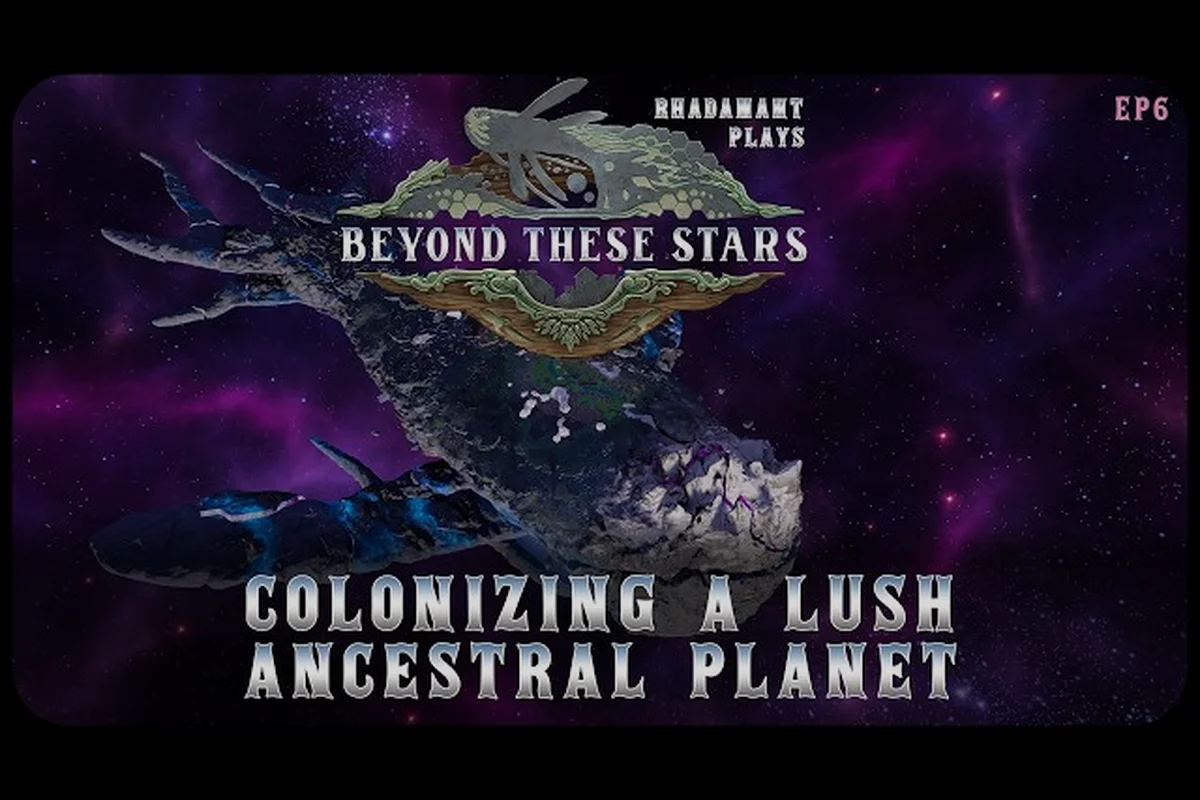
Kewa's back is a living city, but no single planet-bound ecosystem can feed a Peep population forever. When stockpiles thin out and the biome starts to feel the strain, moving goods between worlds is the only way to keep the colony humming. The system for transporting resources across the stars in Beyond These Stars revolves around three buildings — the Space Port, the Landing Pad, and the Spaceship Builder — plus a roster of vessel types that shuttle cargo between Kewa and your settleable planets. This guide walks through what each piece does, how ships actually move goods, and what the trade-offs look like when Kewa's mood starts to shift toward leaving. lus a roster of vessel types that shuttle cargo between Kewa and your settleable planets. Once you understand how the trader and hauler classes keep those supply lines humming, it's worth knowing how the smaller end of the fleet operates, so check out our Beyond These Stars How To Use The Scout Ship guide to see how recon and scouting runs fit into the same logistics picture.
Why Resource Transport Matters Between Kewa and Outposts
Kewa cannot produce everything. The whale's back supplies a baseline of food, building materials, and finished goods, but any colony that expands into harsher biomes will run into shortages of items that simply do not grow in a given climate. That's where Outposts on nearby planets come in. According to the developer's own production-and-resources diary, Outposts exist specifically to supplement what Kewa cannot supply on her own, which makes a working trade lane a long-term survival requirement rather than a luxury. For the primary source, see the official YouTube channel.
The challenge is that ships do not appear out of thin air. Every flight between planets requires infrastructure on both ends and a vessel that knows where to dock. Players sometimes discover this the hard way: a planet full of rich resources sits uselessly because the colony has no way to get the cargo home. Setting up the transport chain early pays dividends across the entire run, because every additional ship adds capacity and every additional Landing Pad adds docking slots.
Beyond basic logistics, transport is also a diplomatic tool. Several alien species encountered on the Galaxy Map will trade with Peeps, and some of those species reward generous behaviour with friendship. A functioning supply line makes it possible to ship gifts, food, or specialty goods to alien contact points without starving Kewa in the process.
The Three Pillars of Interplanetary Logistics
Three building types form the backbone of any working transport chain. The Space Port is the hub on Kewa's back where ships are stored and dispatched, the Landing Pad is the receiving dock on a planet (or an extra dock at a Space Port), and the Spaceship Builder is the workshop that produces new vessels over time. None of the three is optional once a colony commits to expansion.
| Building | Location | Primary Function | Capacity Note |
|---|---|---|---|
| Space Port | On Kewa | Houses ships, manages flight routes | Holds up to 4 Landing Pads, each slotting one ship at a time |
| Landing Pad | On Kewa or on a planet | Docks a single ship for loading/unloading | Each pad holds one ship |
| Spaceship Builder | On Kewa | Produces new ships over time | The Settlement Ship is not player-built |
This separation matters because the three buildings solve three different problems. Without a Spaceship Builder, a colony is stuck with whatever ships they started with. Without Landing Pads, ships have nowhere to land. Without a Space Port, there is no central queue to organise flights.
What Kewa's Disposition Does to Your Supply Lines
Kewa is a character, not a piece of terrain. The whale has health and happiness values, talks back during dialogue prompts, and reacts to the state of the surrounding galaxy. Dev Blog #29 explains that a hot galaxy drags Kewa's happiness down, and if the mood drops far enough, Kewa begins emergency travel toward a colder region. That is the moment the community refers to as "Kewa wants to leave" — and it can interrupt a transport chain mid-flight.
Kewa's choices during dialogue are the most reliable way to nudge the whale's mood back toward cooperation. Players who ignore those conversations for too long often find that their carefully planned routes have shifted, because the destination planet may have rotated out of range. Thinking about transport as a diplomatic exercise, not just a logistics one, helps a colony stay flexible when the galaxy throws curveballs.
Setting Up Space Ports and Landing Pads
A Space Port has to be built on Kewa first. From the player's perspective, it acts as a queue manager: ships assigned to the port will automatically fly between their departure and arrival pads, load or unload cargo, and return. A single Space Port can host up to four Landing Pads, and each Landing Pad can hold one ship at a time. The math is straightforward — more Landing Pads means more simultaneous flights, and more simultaneous flights means faster turnover on perishable resources like food.
Landing Pads can be placed in two different contexts. The first is as extra docks attached to a Space Port, increasing that port's capacity. The second is as standalone pads on the surface of an Outpost planet, where a docked ship loads resources produced locally and ferries them back to Kewa. According to the official Steam page for Beyond These Stars, the game is a colony sim with automation as a core tag, so this hand-off is meant to run with minimal micromanagement once the layout is in place.
Building the First Space Port on Kewa
Placing a Space Port in an accessible spot keeps travel time down for the Peeps ferrying cargo to and from ships. Adjacency bonuses, a feature the developer's beginner guide explicitly calls out, mean a port near resource storage or near a Trawler unloading Shell tends to be more efficient than a port stranded in an empty corner of the city. The Space Port itself does not produce cargo — it only organises it — so pairing it with the right neighbours is what makes the throughput real.
Worth noting from the developer's official beginner guide: ships cannot land on Kewa without a Landing Pad. Trying to skip the pad and dispatch ships into open air simply does not work, which is one of the most common early-game stumbles reported in the small body of player guides that have appeared since launch. Lay the Landing Pads first, build the Space Port second, and queue the ships third.
Building Landing Pads on Outpost Planets
On a settleable planet, Landing Pads are how the cargo gets off the surface and into orbit. A planet without a Landing Pad can still produce resources, but those resources stay planet-bound and cannot reach Kewa. The settlement itself lands via the Settlement Ship, which is dispatched by the story, not built by the player — meaning the first pad on a new world is a player decision, but the act of arrival is not.
The official beginner guide frames the layout choice as a balance between travel distance and adjacency bonuses. A Landing Pad placed next to a Pasture on a sheep-rich planet will pull Wool onto ships faster than one placed across a river, and adjacency bonuses are explicitly cited as a way to shorten travel time. The practical takeaway: when scouting an Outpost location, look for spots where a pad could sit within one or two tiles of a high-yield building before committing.
| Outpost Layout Choice | Cargo Speed | Risk | Best For |
|---|---|---|---|
| Pad next to production building | Fastest handoff | Production halt if pad blocks expansion | Single-resource Outposts (Wool, Shell) |
| Pad at map edge near ocean | Easy ship entry | Long carry distance for Peeps | Fishing or Trawler-based economies |
| Pad in a central plaza | Easy Peep access | Adjacency bonuses to many buildings | Mixed Outposts with several production lines |
| Pad on a tile later needed for housing | Same as central | May need to relocate when population grows | Short-term Outposts meant to be abandoned |
The trade-offs above are not numerical, because the developer has not published per-tile handoff speeds. They are a type-level summary of how players tend to weigh pad placement based on the official beginner guide's advice on adjacency and travel time.
Ship Types, Cargo Slots, and Trade Routes
The Spaceship Builder produces the player-built vessels that move cargo between worlds. According to the official beginner guide and the Spaceship Builder's listing in the verified buildings set, the player-built spacecraft come in named types and are limited to those types. The Settlement Ship, often confused with a player-built option, is not built by the player — it is dispatched as part of the story once a suitable planet has been chosen.
The Scout Ship is the earliest vessel players encounter, and it doubles as the story's exploration tool. Jose, a named character aboard the Scout Ship, helps investigate nodes on the Galaxy Map. The Scout Ship is not a freighter, so treating it as a transport workhorse is a common mistake. For pure cargo runs, players want dedicated trade ships.
Trade Ships and Cargo Capacity
The trade ship is the workhorse of any interplanetary supply line. According to the developer's own coverage of settleable planets and trade routes, a trade ship shuttles between two Landing Pads — one on Kewa and one on an Outpost — and offloads whatever cargo is queued at each end. The exact cargo capacity per ship is not something the developer has published, so any guide that claims a specific number is filling in blanks that the official material leaves empty. Treat capacity as a type-level concept: more ships means more cargo per cycle, and shorter routes mean more cycles per in-game day.
A practical question that comes up early is how many ships a single Outpost actually needs. The honest answer is that the developer has not published a recommended ratio, but community testing on the small body of player guides that have appeared since the October 2026 launch suggests one to two trade ships per active Outpost is a reasonable starting point. Adjust upward if the planet produces a lot of one resource and the cargo queue at the pad is visibly backing up.
| Ship Type | Built By Player? | Primary Role | Notes |
|---|---|---|---|
| Scout Ship | No (story) | Investigating Galaxy Map nodes | Crewed by Jose; not a freighter |
| Settlement Ship | No (story) | Lands the first Peeps on a new planet | Unlocks a new Outpost |
| Trade Ship | Yes (Spaceship Builder) | Shuttles cargo between Landing Pads | The transport backbone |
| Advanced Ship types | Yes (Spaceship Builder, research-gated) | Higher capacity or longer range | Developer has not published tier list |
Trade Routes, Automation, and the Galaxy Map
The Galaxy Map is the planning layer above all of this. According to Dev Blog #28, the map is only partially visible at first and unlocks over time. Nodes on the map can hold barren planets, space junk, strange objects, trade stations, and aliens — each a potential destination for a ship. Trade routes are not a separate building; they are the implicit path between a Space Port's Landing Pad and a destination Landing Pad, and the ship will repeat that path until reassigned.
Players often ask how long they can stay on a given planet before Kewa moves on. The honest answer is that the developer has not published a fixed duration. Kewa's mood, the galaxy's temperature, and the player's dialogue choices all influence the answer. A colony that ignores Kewa's happiness will find itself making shorter stays; a colony that keeps the whale fed, entertained, and cooled will generally enjoy longer windows on a chosen planet.
Outposts, Settleable Planets, and When to Move On
Outposts are the planets a player chooses to colonise after the Settlement Ship lands. They exist to do one job: produce resources that Kewa cannot. According to the developer's own Outpost articles and the official beginner guide, nearby planets are the natural first targets because they keep travel time short, but the Galaxy Map can be pushed open to reveal further worlds as it unlocks.
Settleable planets are not all the same. Some favour sheep and Wool, others are better suited to Cows or to Shell harvesting from the ocean. The official beginner guide points to a Neutral Sector, a named region in Dev Blog #28, which holds a moderate-climate planet with chickens and cows — a soft starter option for Outpost economies. Other planets lean toward harsher climates, which produce different resources but require more infrastructure to keep Peeps happy.
Choosing the First Outpost Planet
A first Outpost should usually favour proximity over exotic resources. Short flight times mean more cargo per in-game day, which means the central colony on Kewa stays supplied while the player is still learning the transport ropes. The first planet is also the place where mistakes are cheapest: if a pad placement goes wrong or a ship assignment does not work out, the colony can be abandoned or rebuilt without crippling the main settlement.
For a broader look at how Outpost candidates stack up, the outpost tier ranking breaks down the trade-offs between the Neutral Sector starter planet, hot-galaxy worlds, and cold-galaxy worlds. The same article also flags "colonial guilt" as a community term for the feeling of abandoning a struggling Outpost mid-run — a sentiment worth keeping in mind when choosing between a safe first planet and a higher-yield second one.
How to Convince Kewa to Stay (or to Move)
The phrase "Kewa wants to leave" shows up in player conversations the moment the galaxy temperature rises. Convincing Kewa to stay — or at least to delay an emergency move — is mostly a matter of keeping the whale's happiness and health high. The dialogue choices that come up at certain story beats are the most direct way to nudge that mood, and ignoring them tends to compound over time. Practical steps that support those conversations include planting trees, minimising Pollution, and creating rivers, all of which the developer has called out as biome-health positive.
| Kewa Mood Lever | Effect on Transport | Source |
|---|---|---|
| Dialogue choices | Direct happiness adjustment | Official beginner guide |
| Biome health (trees, low Pollution, rivers) | Indirect happiness gain | Dev Blog #29 |
| Galaxy temperature | Hot galaxy drags mood down; cold galaxy cools things off | Dev Blog #29 |
| Peep celebrations | Temporary happiness boost | Dev Blog #22 |
| Outpost supply line | Smooth resource flow keeps Peeps and Kewa fed | Developer's Outpost articles |
The levers are interconnected, and no single one will save a colony on its own. A good rule of thumb: when transport lines are stable and Kewa is fed, the whale is more inclined to linger, and longer stays mean more cargo runs before the next move.
Aliens, Trade Stations, and Befriending the Galaxy
Beyond These Stars is not a combat game, but it is full of alien contact. Dev Blog #28 lists aliens as one of the node types on the Galaxy Map, and the developer's named cast list includes Ublo, an alien character officially described as "infamous" and "cheeky" in Dev Blog #26. Several alien species can be encountered, traded with, and eventually befriended — and the rewards for those friendships tend to be economic rather than combative.
Alien trade stations, a separate node type on the Galaxy Map, function as a waystation where ships can dock and exchange goods without landing on a planet. This is a useful distinction: a trade station is a feature a player travels to via the Galaxy Map, not a building the player places. Conflating the two is a common early-game confusion.
How to Befriend Aliens
Befriending an alien species is a slow-burn diplomatic process rather than a one-off gift exchange. The aliens guide to first contact recommends approaching alien nodes with a small cargo of useful goods, then returning to trade over several cycles. Some species respond better to food, others to specialty items like Wool or Cold Weather Clothing, and the developer has not published a universal recipe — so players should expect to experiment.
The diplomatic angle matters for transport planning. A friendly alien species may unlock new routes, share resources, or simply stop being a hostile presence on the map. Hostile species, while not violent in the traditional sense, may make certain nodes harder to reach. A colony that invests in alien diplomacy early tends to have more options later, especially when a hot-galaxy emergency forces Kewa into cold territory and the route map suddenly shifts.
Alien Species and Their General Tendencies
The developer has named Ublo as the most prominent alien character, but several alien species exist as node types on the Galaxy Map. As of the October 2026 launch, the developer has not published a full species roster or a reward table, so any list claiming otherwise is filling in gaps that the official material leaves blank. What the developer has confirmed is that aliens are encounterable, tradeable, and in some cases befriendable, with outcomes that depend on the player's choices and the goods offered.
| Alien Encounter Type | Tradeable? | Befriendable? | Reward Style |
|---|---|---|---|
| Named character (Ublo) | Yes | Yes, with patience | Economic and narrative |
| Stationary alien species on a planet | Yes | Yes, over multiple visits | Goods and route access |
| Wandering alien node on Galaxy Map | Limited | Not always | Specialty items |
| Alien species in harsh biomes | Yes | Yes, but slower | Cold Weather Clothing often useful |
The table is a type-level summary, not a published reward list. The exact reward structure is something the developer has not published at the time of launch, so any guide promising guaranteed outcomes is overselling the certainty.
Frequently Asked Questions
How does transporting resources work between Kewa and an Outpost?
A ship built in the Spaceship Builder docks at a Landing Pad on Kewa, flies to a Landing Pad on the Outpost planet, loads cargo, and returns. The Space Port on Kewa manages the queue and holds up to four Landing Pads at a time. A working chain needs a Space Port, at least one Landing Pad on each end, and at least one trade ship.
How long can you stay on a planet before Kewa moves on?
The developer has not published a fixed duration. Kewa's happiness, the galaxy's temperature, and the player's dialogue choices all factor in. A colony that keeps Kewa fed, cool, and entertained through dialogue can expect longer stays, while a hot galaxy and ignored dialogue push the whale toward emergency travel.
What does it mean when Kewa wants to leave?
It is a story beat triggered when Kewa's happiness drops too far, often because the galaxy is too hot or because the player's dialogue choices have been neglected. The whale will then initiate emergency travel toward a colder region, which can shift the Galaxy Map and break existing trade routes. Cooling the galaxy, feeding Kewa well, and engaging in dialogue all help.
How do you convince Kewa to stay longer?
Keep Kewa's happiness and health high. Practical levers include answering dialogue prompts thoughtfully, planting trees, minimising Pollution, creating rivers, and keeping food and specialty goods flowing from Outposts. The levers compound — no single one is enough on its own, but together they buy meaningful time.
What alien species are in Beyond These Stars, and can you befriend them?
The developer has named Ublo as a prominent alien character and confirmed that several alien species exist as Galaxy Map nodes. Some are tradeable, some are befriendable, and the rewards lean economic rather than combative. The developer has not published a full species roster or a guaranteed reward table, so players should expect a slow diplomatic process.