
Beyond These Stars asks you to do something uncomfortable on purpose: leave the back of a giant space whale, load a Settlement Ship, and plant a colony on a planet you have barely looked at. Outposts are how you supplement what Kewa cannot provide, and choosing the wrong first world can stall your entire production pipeline. This ranking walks through every settleable planet, weighs what each one gives back, and explains when a hard-to-reach world is actually worth the fuel and the colonial guilt. choosing the wrong first world can stall your entire production pipeline. This ranking walks through every settleable planet, weighs what each one gives back, and explains when a hard-to-reach world is actually worth the fuel and the colonial guilt — and if you want the raw census of every habitable world before you commit, our Beyond These Stars settleable planets index lays out the full roster in one place.
How Outpost Selection Works in Beyond These Stars
The 1.0 release (October 2026) hands you outposts as the official answer to resource gaps on Kewa. The Galaxy Map, which Dev Blog #28 describes as only partially visible at first, fills in node by node as you explore. Some nodes are barren planets worth settling. Some are space junk, strange objects, trade stations, or aliens like Ublo. The Scout Ship with José aboard is what converts those nodes into information, and only after the node is investigated can a Settlement Ship land on it — and the Settlement Ship is not something you build, it arrives as part of the story flow. For the primary source, see Balancing Monkey Games' presskit.
Once landed, an outpost is its own little economy. It produces what its biome allows, ships it through a Space Port back to Kewa, and costs you Peep-hours, fuel, and attention. Every settleable planet therefore has a real opportunity cost: time spent building a Pasture on a distant sheep world is time you are not spending on a Closer-to-Kewa farm, a Trawler for Shell, or a Cleaner to fight Pollution on the whale's back.
The Three Variables That Decide an Outpost's Value
Three inputs determine whether a candidate planet is worth colonising. Treat them as your ranking axes before you read the tier table further down. The phrase colonial guilt is not a meme — it surfaces in player discussions because the game leans into it thematically. Kewa's dialogue after you settle a new world nudges their happiness, and unhappy Kewa is documented in Dev Blog #29 to drag the whole voyage down: a hot galaxy makes Kewa want to emergency-travel somewhere cold, and a cold one has its own version. There is no published number for "how unhappy" a settlement makes Kewa, because the developer has not published per-outpost happiness deltas. What players have observed anecdotally is that ignoring Kewa's preferences, settling on planets that visibly disturb them, or chaining settlements without returning home compounds over time.
| Variable | What it measures | Why it matters |
|---|---|---|
| Distance from Kewa | Sectors of travel between the whale and the planet | Longer distance = more fuel per shipment and longer Peep shifts away from the main city |
| Biome resources | What raw materials the planet can produce natively | Drives whether the outpost reduces or increases your import load |
| Colonial friction | Strikes, persuasion checks, and Peep happiness on arrival | A planet that fights you back can cancel out any biome advantage |
Why "Colonial Guilt" Is a Real Mechanic
The practical effect is that you cannot rank outposts purely on resource yield. A pasture-rich planet three sectors out may deliver more Wool per shift than a closer rocky world, but if Kewa's happiness drops far enough, your Celebrations stop firing and your production bonuses evaporate. Ranking therefore weighs biome reward against relational cost.
Tier List: Settleable Planets Ranked
The following ranking is built from confirmed official building and resource lists (Pasture, Trawler, Tree Nursery, Burner, etc.) and from what each biome is documented to support. The developer has not published exact production numbers, so the tiers reflect relative return on investment rather than measured output.
| Tier | Planet archetype | Primary biome reward | Main drawback |
|---|---|---|---|
| S | Moderate-climate Neutral Sector world (chickens, cows) | Self-sufficient protein source, short travel time | First you have to find it |
| A | Temperate forest world | Wool via Pasture, wood, possible Cotton seeds | Happiness cost if Kewa dislikes the climate |
| B | Coastal / shell-rich world | Shell via Trawler, fish-adjacent resources | Peeps need warm clothing depending on biome |
| C | Cold / ice world | Long-term research unlocks, unique nodes | Clothing and warmth buildings required up front |
| D | Barren rock | Only worth settling for narrative reasons | Almost nothing grows without terraforming |
S-Tier: The Neutral Sector World
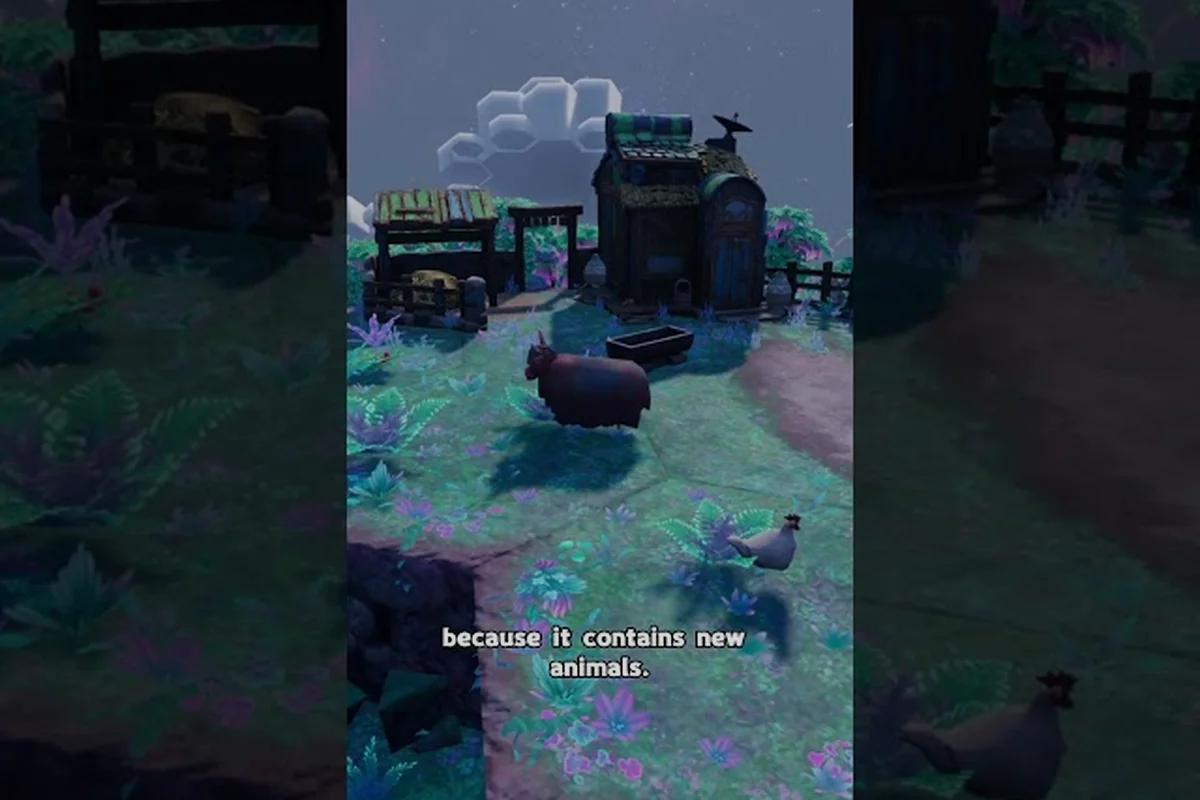
Dev Blog #28 names a specific region: the Neutral Sector, described as a moderate-climate planet that holds chickens and cows. This is the single best first outpost in the game because it solves the protein problem that Kewa cannot solve alone. Chickens and Cows are both in the verified resource list, and bringing them home lets you stop importing food from the Settlement Ship's emergency rations. The Neutral Sector's moderate climate also means you do not need Cold Weather or Warm Weather Clothing infrastructure from the Tailor to keep Peeps alive, which trims your upfront building cost.
What makes this planet S-tier is not the chicken-and-cow combo in isolation — it is that the Neutral Sector is narratively easy. The dialogue path that unlocks it is short, the persuasion check is documented by players as forgiving, and the planet is far enough from the hostile edge of the galaxy that Kewa does not start emergency-traveling. Settle here first, get your protein economy running, then expand.
A-Tier: Temperate Forest World
The temperate forest world is the home of the Pasture as a real production building. Wool is on the verified resource list, and Cotton seeds can be found on a planet with sheep according to official material. A forest world is therefore the canonical choice for your textile outpost: the Weaver and Tailor downstream both depend on fabrics that originate here, and Cold Weather and Warm Weather Clothing — both verified resources — cannot be made without that fabric pipeline.
The catch is happiness. Kewa's preferences matter, and forest worlds sit in temperate bands that Kewa can either love or find merely acceptable. Players report that settling a forest world while Kewa is already mildly unhappy is the fastest way to trigger a sustained mood dip. Rank the A-tier below Neutral Sector for that reason, even though raw Wool output per shift may be higher.
B-Tier: Coastal and Shell-Rich Worlds
Shell is on the verified resource list, and the Trawler is the verified building that harvests it. A coastal world therefore unlocks your Shell economy, which feeds several crafting chains later in the game. The B-tier ranking reflects that Shell is not a daily-need resource the way food is — it is a mid-game throughput bottleneck that hurts only when you have already pushed your research tree into advanced goods.
Coastal worlds also tend to have warmth swings. Without a Tailor supplying Warm Weather Clothing to outpost Peeps, you can see shifts slow as workers pause to manage their own comfort. That makes coastal outposts an early-to-mid game investment rather than a first-week one.
C-Tier: Cold and Ice Worlds
Cold worlds are not bad planets — they are late-game planets. The research-gated buildings and perks that make a cold world actually productive are locked behind technologies you do not have on day one. The Tailor and Cold Weather Clothing are part of what makes a cold world viable, but the upkeep cost of running a cold outpost before you have that infrastructure is brutal on Peep happiness.
The other reason cold worlds sit in C-tier is travel time. Multiple sectors of cold-space traversal every time a Peep ship docks means more fuel and more shifts lost. Rank these as "settle when you must, not when you can."
D-Tier: Barren Rock
Barren rock nodes exist on the Galaxy Map as a reminder that the map is bigger than your production needs. The developer has not published that barren rock produces any verified resource, and the terraforming effort required to make one productive is documented in the verified Terraforming system (digging canals, adding top soil, planting trees, maintaining forests) — that is a lot of work for a planet that is closer to Kewa than any of the better options.
Settle a barren rock only for narrative reasons, or to anchor a Space Port chain that lets you reach something better behind it. The Space Port itself holds up to four Landing Pads, each taking one ship at a time, so a barren rock with a Space Port can function as a mid-route refueling node even if the rock itself never produces anything.
The Persuasion and Colonial Guilt Layer
The keyword "persuasion" is best read as a type-level description: the game does not show a single "Persuasion: 47" stat, but it shows persuasion-shaped moments. Kewa's dialogue is a series of choices that nudge happiness one way or the other. Ublo, the "infamous" and "cheeky" alien from Dev Blog #26, runs persuasion-shaped encounters of his own. And the Galaxy Map itself persuades you, by unlocking node by node, into thinking that the next planet is always the one you need.
Treat each of these moments as an actual mechanic, not flavour. A bad dialogue choice with Kewa right before you settle a new world stacks with the happiness cost of the new world itself, and the game has no documented "undo" for that. The developer has not published exact happiness thresholds, only that Kewa's health and happiness are their own system. So the rule of thumb the community has settled on is simple: do not chain settlements, and never settle while Kewa is visibly agitated.
Building the Outpost Stack, Not Just the Outpost
A common mistake is to optimise the outpost in isolation. A Sheep planet is good. A Sheep planet with a Space Port that links back to Kewa through two intermediate Landing Pads is much better, because every shipment costs less Peep-time.
| Outpost layer | What it provides | Why it ranks higher than the raw biome |
|---|---|---|
| Single biome | One resource stream | Useful, but pays full travel cost |
| Biome + Space Port | Resource stream + local shipping hub | Cuts total travel cost across all later outposts |
| Biome + Space Port + Landing Pad chain | Resource stream + fuel-efficient hub | Becomes a regional anchor for further expansion |
The official-developer-linked Beginner's Guide covers settlement logistics in more detail if you want a step-by-step setup, but the core principle is that you almost never regret building a Space Port on a planet you settle. The mechanical answer is "settle the Neutral Sector first." The realistic answer depends on what your main city actually needs. Run through this short list before you commit:
How to Choose Your First Outpost in Practice
-
If your main bottleneck is food (Peeps are hungry, soup ingredients are running low): Neutral Sector world first.
-
If your main bottleneck is clothing (Peeps are cold, no Cotton seeds, no Wool): Temperate forest world with a Pasture.
-
If your main bottleneck is crafting materials (advanced goods research is gated on Shell): Coastal world with a Trawler.
-
If your main bottleneck is Pollution on Kewa: stay on Kewa and build a Cleaner plus a Tree Nursery before you settle anything new.
That last point matters. Pollution is documented in Dev Blog #29 as something you address by planting trees, minimising pollution, and creating rivers to keep the biome healthy. A Cleaner mixes Water and Chemicals to address it more directly. If Kewa's biome is degrading, an outpost will not fix that — only on-whale buildings will.
When to Skip an Outpost Entirely
There are scenarios where the right answer is "no outpost yet." Kewa wants to leave the current sector (per the documented travel mechanic), the temperature is dragging their happiness down, and you have not stabilised your home base. In that case, settling a new planet is the worst possible move. A new outpost adds Peeps, adds production noise, and adds diplomatic cost — all while the base you have is still fragile.
The Spaceship Builder exists, but per the verified building list, the Settlement Ship that actually lands on a new planet is not something you build. So you also cannot "stockpile" settlement potential — when the story gives you a Settlement Ship, the game expects you to use it, which means you should already know which world you want.
Frequently Asked Questions
What is the best planet to settle first in Beyond These Stars?
The moderate-climate world inside the named Neutral Sector region is the strongest first choice, because it holds chickens and cows and removes your protein import burden. Settle it before you commit to a temperate forest or coastal world, even if those long-term yields are higher.
Does settling an outpost really cause colonial guilt?
It is best described as a type-level thematic mechanic rather than a single stat. Kewa's happiness shifts in response to your choices, and the developer has not published a numeric happiness delta per outpost. Players report that chaining settlements and ignoring Kewa's dialogue preferences compounds unhappiness over time, which is why the guide recommends spacing outposts and checking in with Kewa between them.
How do persuasion and outposts interact?
Persuasion-shaped moments appear in Kewa's dialogue and in alien encounters such as Ublo's. They influence happiness and unlock conditions rather than a single numeric stat. Settling a new planet after a bad persuasion outcome stacks the mood cost, so it is safer to settle only when Kewa is in a stable mood.
Where does the Pasture fit in the outpost tier list?
The Pasture is the verified building that turns a planet with sheep into a Wool outpost, and it is the reason temperate forest worlds sit in A-tier. It only functions on a planet that actually has sheep, so do not build it on a world that lacks them.
Can I settle a planet without a Landing Pad?
No. The verified rule is that Space Ships cannot land on Kewa without a Landing Pad, and the same landing-pad principle applies to outpost planets. Build a Space Port with at least one Landing Pad on any new world you intend to receive ships on, or the Settlement Ship cannot dock.