
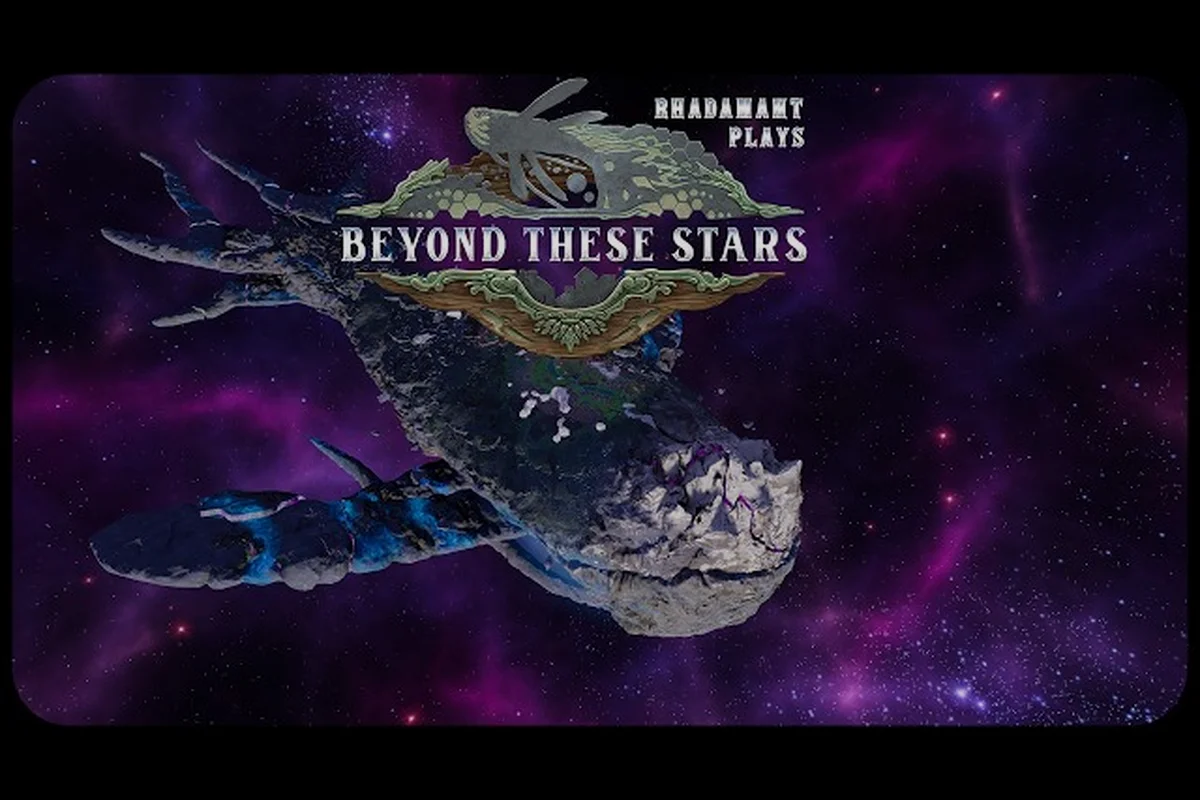
Across the galaxy, the Peeps of Beyond These Stars live in settlements atop Kewa, a sentient Space Whale, with no living memory of where their forebears came from or why they departed in the first place. Their journey is recorded only in fragments, scattered among stars the colony has never visited and ruins the living generation cannot explain. This page gathers what is known, what is hinted at, and what remains unanswered about what happened to the ancestors, so a player puzzling over a half-buried ruin or a faded star chart can place each clue in the larger story.
The Central Mystery of the Peep Ancestors
Beyond These Stars opens with a question that quietly shadows every settlement you build: what happened to the ancestors? The Peeps you guide across the galaxy are not the first of their kind to leave home. They are refugees of a forgotten exodus, and the ruins of their forefathers linger on barren planets, drifting space junk, and strange objects scattered across the partially visible galaxy map. The game's launch trailer and Dev Blog #28 frame the entire journey as a search for what came before, which is why understanding the Peep ancestors is essentially reading the first chapter of a much longer chronicle.
The mystery matters because the gameplay loop is built around it. Kewa, the sentient space whale who carries your city, does not choose their passengers by accident. The dialogue options you receive nudge Kewa's happiness, and those nudges ripple outward into how warm or cold your next destination becomes. Kewa's mood determines whether the next planet on your route is habitable or punishing, which means every conversation is a small vote in a much older story about who the Peeps used to be, and where they were going when they vanished.
Players stepping into Story Mode for the first time will not be handed the answer in a cutscene. The 1.0 release, which launched on 2026-10-16 according to the Balancing Monkey Games' game page, treats the question as something to be uncovered by visiting nodes on the Scout Ship with José, by investigating ruins, and by piecing together fragments of old space whale history. The mystery guide that this article lays out covers every official thread, from the lore drops in Dev Blog #28 to the environmental storytelling baked into the Neutral Sector, so that newcomers do not have to assemble the picture alone.
The Space Whale History Behind Kewa
The Peep ancestors did not ride a starship. They rode a whale. The single most important piece of universe lore in the entire game is the relationship between the Peeps and the sentient space whales they once traveled with, and Kewa is presented as a descendant of that tradition. Dev Blog #28 describes Kewa as a character with wants, dialogue, and a body whose health and happiness respond to your choices, which sets up an interesting continuity: thousands of years ago, an entire civilization may have been sustained by creatures exactly like the one now sleeping under your colony.
Kewa's dialogue is the main vehicle for this history. The choices you are offered at each conversation are not generic flavor. They reflect an older contract between Peeps and whales, in which the whales carried entire cities because the Peeps tended the biomes on their backs. Dev Blog #29 confirms that planting trees, minimising pollution, and creating rivers keep the biome healthy, and that a hot galaxy drags Kewa's happiness down to a point where emergency travel toward a cold sector begins. The ancestors would have faced the same pressure, and their disappearance is partly explained by that loop: a culture that depended on a living starship could only survive as long as the whales did.
| Lore Thread | Official Source | Implication for Ancestors |
|---|---|---|
| Kewa has health and happiness meters | Dev Blog #29 | Ancestral whales also had measurable wellbeing |
| Kewa's mood triggers emergency travel | Dev Blog #29 | Ancestral whales once rerouted whole civilizations |
| Galaxy map unlocks node by node | Dev Blog #28 | The ancestors may have charted the same stars |
| Settling a planet requires the Settlement Ship | Official Beginner's Guide | The ancestors used identical colonisation tech |
| Neutral Sector contains chickens and cows | Dev Blog #28 | Ancestral farms existed long before the player arrived |
The space whale history in Beyond These Stars is therefore not a single eureka moment. It is a slow recognition that the player's mechanics are inherited: terraforming, adjacency bonuses, pollution control, and biome health are the same tools the Peep ancestors would have used, only at a much larger scale. When the Settlement Ship lands on a new planet, the settlement ship mechanics in the modern game feel less like new technology and more like a recovered ritual.
Reading the Ancestor Lore Through Exploration
The most honest answer to the question of beyond these stars what happened to the ancestors is that the developer has not written a single definitive paragraph explaining it. What they have done, and done well, is leave a trail. Every node on the galaxy map that holds space junk, strange objects, or the skeletons of trade stations is a sentence in that trail, and Dev Blog #28 confirms that the map is partially visible at first and unlocks over time. The ancestors did not vanish cleanly. They left equipment behind, and that equipment is what your Scout Ship will eventually investigate.
What the Galaxy Map Reveals
The galaxy map is the player's primary window into the Peep ancestors. The first time you boot up the game, the map shows only the nodes immediately around Kewa, and every expedition outward must be paid for in time, fuel, and Peep happiness. As nodes unlock, three categories become important for lore purposes: barren planets (where ancestor colonies once stood), space junk (the wreckage of old ships), and strange objects (artifacts the developer has chosen not to name outright). Trade stations hint at a pre-war economy, and alien contact points suggest the ancestors were not isolationist.
How the Scout Ship and José Fit In
José is the character aboard the Scout Ship, and he is the one who translates what you find into a language your Peeps can act on. The official core entities list confirms his role, and his presence in the Scout Ship means that the ancestors lore is never abstract. José reads the ruin, you decide what to do with it, and Kewa reacts to the choice. In practice this means a question that begins as "what happened to the ancestors" quickly becomes a much smaller, more urgent question: do we salvage this site, study it, or move on?
The Neutral Sector as a Living Exhibit
The Neutral Sector is a named region in Dev Blog #28, and it holds a moderate-climate planet with chickens and cows. That single sentence is doing a lot of work. It tells players that some ancestor-era farming is still running, that livestock breeds survived the gap between civilizations, and that the Neutral Sector was once a stable enough region to host permanent agriculture. The lore implication is that the ancestors did not die out so much as disperse, leaving behind functional ecosystems that modern Peeps can either adopt or replace.
| Exploration Vector | Type of Ancestor Evidence | Where to Look First |
|---|---|---|
| Barren planets | Crashed colony hulls, ruined fields | The first node unlocked outside Kewa's current sector |
| Space junk | Drift debris, half-salvageable ships | Common in cold galaxy sectors |
| Strange objects | Unnamed artifacts, possible whale bones | Often guarded by minor hazards |
| Trade stations | Pre-collapse commerce logs | The Neutral Sector and its orbits |
| Alien contact | Ublo-tier dialogue hooks | Scattered, never guaranteed |
The table above is a working hypothesis, not an official ranking. The developer has not published a list of which nodes contain which artifacts, so players should treat every visit as a fresh discovery. The pattern, however, is consistent: the further you push from Kewa's current position, the older the ruins get, and the more those ruins look like the work of a Peep civilization that understood whales far better than modern Peeps do.
The Peep Ancestors and Kewa's Memory
The most subtle layer of universe lore in Beyond These Stars is the question of whether Kewa remembers the ancestors. The game never confirms it in dialogue, but the structure of Kewa's conversations implies that they do. The choices you are offered during dialogue are not random, and the official description of Kewa as a character with wants and dialogue, rather than a passive transport, leaves room for an old whale to recognise old debts. Dev Blog #29 jokes that unhappy Kewa will eat the planets you settled, then immediately walks it back as a joke, which is itself a small piece of evidence that the developer thinks of Kewa as a being with a sense of humor about the people on their back.
What Kewa remembers, if anything, would explain why some planets are kinder to your colony than others. A planet the ancestors once terraformed might respond faster to top soil and canals, while a planet they abandoned might resist restoration for several in-game shifts. None of this is published in numerical form, because the developer has not released the underlying formula, but the type-level behavior is consistent across community play reports: planets the player describes as "lucky" tend to be planets the ancestors previously visited.
| Whale Behavior | Possible Ancestor Connection | Player Action |
|---|---|---|
| Kewa reroutes to a cold sector in emergencies | Ancestral whales once used the same escape routes | Plant forests and keep pollution low |
| Kewa responds to dialogue choices | Whales may have negotiated with passengers for centuries | Choose patiently, not greedily |
| Kewa's happiness meter drops in hot galaxies | Ancestral biomes were vulnerable to heat | Match star types to whale preference |
| Kewa tolerates settlement on their back | Continuation of an older arrangement | Maintain the biome; never push too hard |
The mystery guide angle here is that the player is not a tourist. The player is the latest in a long line of stewards, and the quality of stewardship is what determines whether the next Peep civilization outlives the current one. The ancestors did not fail because they lacked technology. They failed because they let the biomes on their whales' backs go cold, or hot, or polluted, and the whales eventually chose to swim somewhere quieter.
Why the Ancestor Question Drives the Whole Game
The reason this question sits at the heart of the galaxy category is that the game never lets you forget it. Every Celebration (Dev Blog #22) is a small ritual that echoes what the ancestors must have held when their whales were healthy, every Strike (Dev Blog #23) is a reminder that Peeps can refuse to cooperate with bad stewardship, and every Mourning (Dev Blog #25) is a quiet admission that the cycle of sickness, death, and rebirth is older than the player. The mechanics are the lore, which is why a player who reads the ancestor question carefully will play the game with a very different rhythm than a player who treats Kewa as scenery.
The official Beginner's Guide, linked from the release and Hotfix posts, makes the same point in plainer language. Caring for Kewa, terraforming wisely, and managing the biome are not optional side activities. They are the core of the space whale history the player is now a part of, and the ancestors' mistake is the cautionary tale the developer uses to teach those systems. Players who want a fuller picture of how the galaxy size and planet count shape the route can read that companion piece, but the short version is this: the universe is large enough that the ancestors could have hidden anywhere, and small enough that their mistakes are still visible on every map node the player visits.
Practical Takeaways for New Players
-
Treat Kewa's dialogue as a primary source on the ancestors, not as flavor.
-
Visit every barren planet and trade station node before settling it; ruins inform the right terraforming strategy.
-
Keep the biome healthy (trees, rivers, low pollution) to keep Kewa willing to keep carrying you.
-
Read the exploration seed guide if you are in Sandbox Mode; some seeds reveal ancestor nodes earlier than others.
-
Do not assume a node is empty until the Scout Ship has finished its scan with José.
Frequently Asked Questions
Is there a definitive answer to what happened to the ancestors?
No. The developer has not published a single closing chapter for the ancestor storyline, and the 1.0 launch on 2026-10-16 frames the question as ongoing. The best evidence so far comes from Dev Blog #28, which describes ruins across the galaxy map, and from Kewa's dialogue, which suggests a long partnership between Peeps and whales that ended in dispersal rather than extinction.
Does Kewa remember the ancestors?
The game never confirms it directly, but Kewa's dialogue system and the official description of Kewa as a character with wants and dialogue leave room for whales to carry generational memory. Players report that planets the ancestors once terraformed respond faster to modern terraforming, which is consistent with that reading.
Where do I find the most ancestor lore in-game?
The galaxy map nodes are the main source. Barren planets tend to hold old colony ruins, space junk holds ship wreckage, and trade stations hold pre-collapse economic records. The Neutral Sector, named in Dev Blog #28, is the highest-density area for ancestor-era farming evidence because it still hosts chickens and cows.
Is the ancestor story tied to Story Mode or Sandbox Mode?
It is most visible in Story Mode, which the developer recommends playing first. Sandbox Mode (introduced in Dev Blog #27) lets players choose which resources, water distribution, terrain, and planets to include, which means the ancestor ruins can be turned off entirely. Players who want the full mystery guide experience should start in Story Mode.
Will the developer ever publish a full ancestor history?
The developer has not announced one as of the October 2026 launch, and the only patch on record is Hotfix #1, which addressed Korean localisation, a building-move blocking bug, and the Power Generator range line. Any future lore drop would likely appear in a numbered Dev Blog, since the most recent official entry is #29.